

图片来源:AutoHaina Media
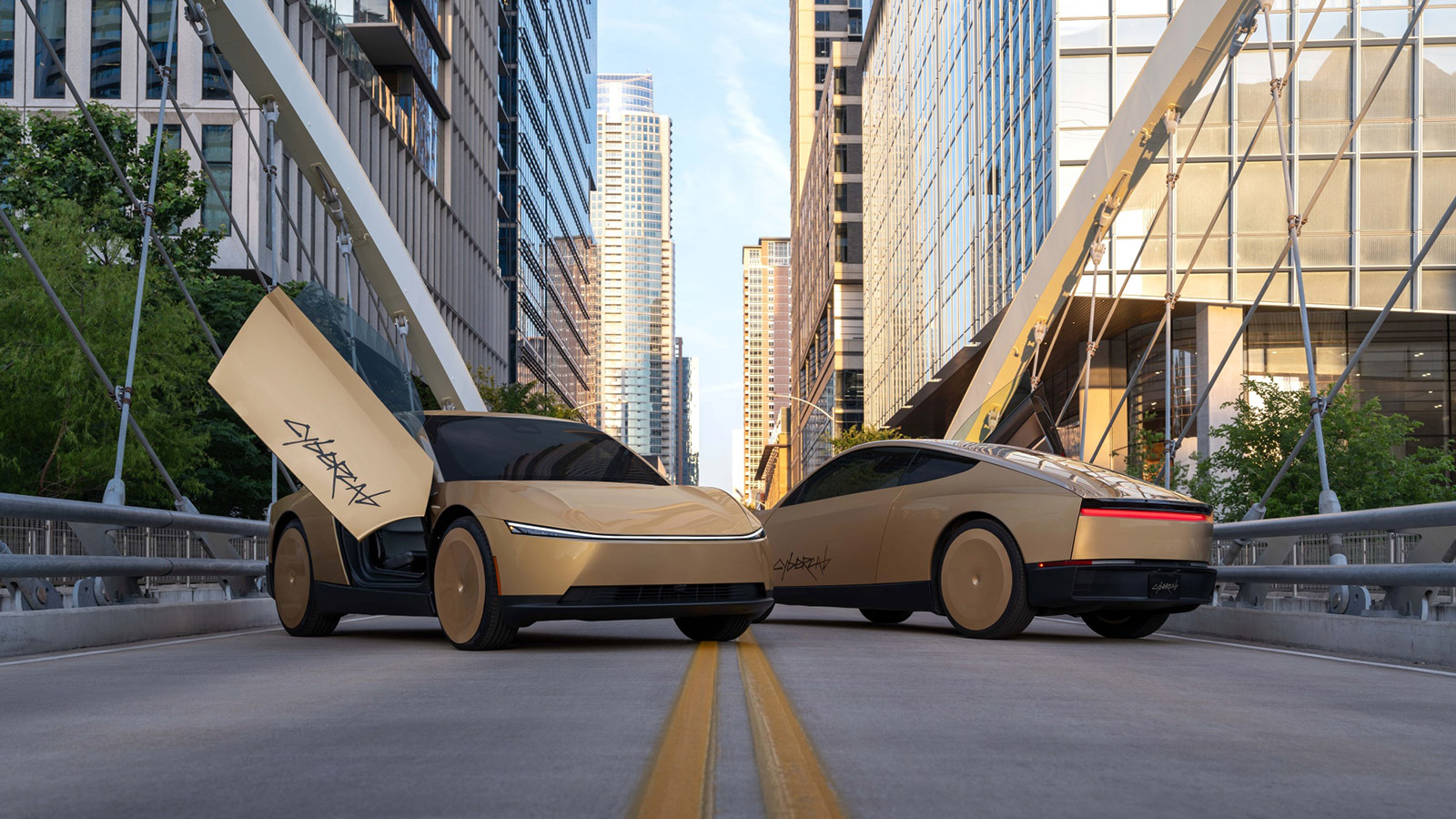
- Tesla said the Cybercab will go on display in cities including Beijing and Shanghai, with no plans for sales or commercial operations in China.
- The 2-seat robotaxi, which has no steering wheel or pedals, has begun operations in Austin.
Tesla (NASDAQ: TSLA) said Thursday that the Cybercab had begun operations in Austin, Texas, advancing its driverless ride-hailing initiative to the purpose-built production vehicle stage.
The Cybercab has no steering wheel, pedals or conventional rearview mirrors, and is controlled entirely by Tesla's autonomous driving software. Its 2-seat cabin contains only passenger seats and a 22-inch central display.
The vehicle will soon enter the public spotlight in China. Tesla said in a statement that the Cybercab will go on display in Beijing, Shanghai and several other cities beginning in mid-September, marking its first public appearance in the country.
The future has arrived in Austin pic.twitter.com/RTCb0O5sez
— Tesla (@Tesla) September 3, 2026
However, the events are intended solely to showcase the vehicle's design and technology. They do not involve sales of the Cybercab in China or indicate that Tesla plans to launch commercial robotaxi operations in the country.
To celebrate the milestone, Tesla published multiple posts on Weibo — China's version of X, on Friday, saying the future had arrived.
Photos shared by Tesla on Weibo:
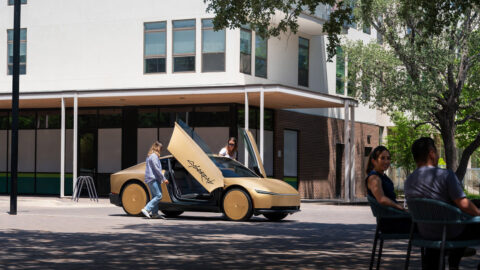
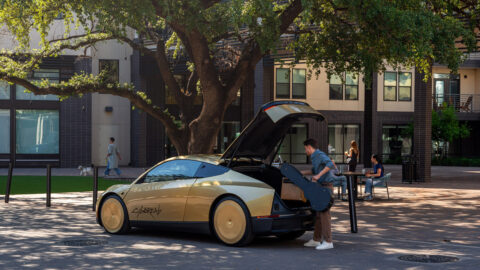
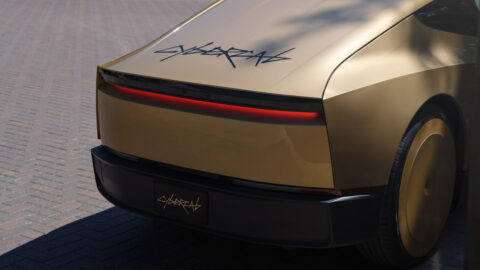
The Cybercab was first unveiled as a concept at Tesla's "We, Robot" event in October 2024. The first production vehicle rolled off the line at the Texas Gigafactory in February, and formal mass production began in April, about 18 months after its debut.
Although Tesla described the latest development as the start of official operations, the Cybercab fleet remains limited in size.
Tesla had registered 38 additional Cybercabs for its local robotaxi fleet as of August 31, bringing the total to 45, according to data from the Texas Department of Motor Vehicles. The vehicles had previously been used primarily for employee test rides.
The Cybercab uses 8 high-definition cameras to perceive its surroundings and an end-to-end neural network to make driving decisions.
It does not rely on LiDAR or high-definition maps and uses the same AI 4 computing hardware found in the current Model 3 and Model Y.
Tesla said its global fleet had accumulated more than 22.5 billion kilometers of assisted-driving mileage as of September 2026. The amount of driving data added by the fleet each day is equivalent to that generated by a person driving continuously for 500 years.
In terms of energy efficiency, the Cybercab is expected to consume about 10.2 kWh per 100 kilometers, equivalent to 9.8 kilometers per kWh.
The robotaxi has a curb weight of 1,412 kilograms and is equipped with a 47.6-kWh battery pack and a 163-kW motor.
Tesla's materials also show that the Cybercab has a laboratory-tested range of 673 kilometers. However, that figure was achieved under laboratory conditions and is not directly comparable with its real-world energy-efficiency and battery-capacity figures.
Cost is central to the Cybercab's challenge to the existing ride-hailing model. Tesla expects the cost per mile to fall to $0.20 once operations reach scale, one-tenth of what it says is the industry average.
That figure remains a long-term target rather than the actual operating cost of the current small fleet. Tesla aims to lower costs through the 2-seat design, reduced energy consumption, driverless operations and a new manufacturing method.
The Cybercab uses an "Unboxed" manufacturing process, allowing different subassemblies to be produced in parallel before final assembly.
Tesla CEO Elon Musk has said the long-term goal for the production system is to roll one vehicle off the line every 5 to 10 seconds.
The vehicle is also designed with wireless charging and automated cleaning for driverless operations, reducing the need for human involvement in charging, maintenance and fleet turnover.
The Cybercab's entry into service in the US comes as Chinese companies accelerate the commercialization of robotaxis.
Tesla rival Xpeng (NYSE: XPEV) has completed more than 2,000 internal test orders in Guangzhou with its production robotaxi based on the GX large SUV. It plans to begin carrying passengers without onboard safety operators in 2027.
Xpeng's technology approach is similar to that of the Cybercab, with both using vision-only systems that do not rely on LiDAR or high-definition maps.
Xpeng uses its in-house-developed Turing AI smart driving chips, with driving decisions handled by its second-generation Vision-Language-Action (VLA 2.0) model.
Baidu's Apollo Go had provided more than 22 million rides to the public as of April this year.
In addition, China is home to companies such as WeRide (NASDAQ: WRD) and Pony AI (NASDAQ: PONY), which specialize in the robotaxi business and have already expanded into overseas markets.
Source: CnEVPost (View original)