

图片来源:AutoHaina Media
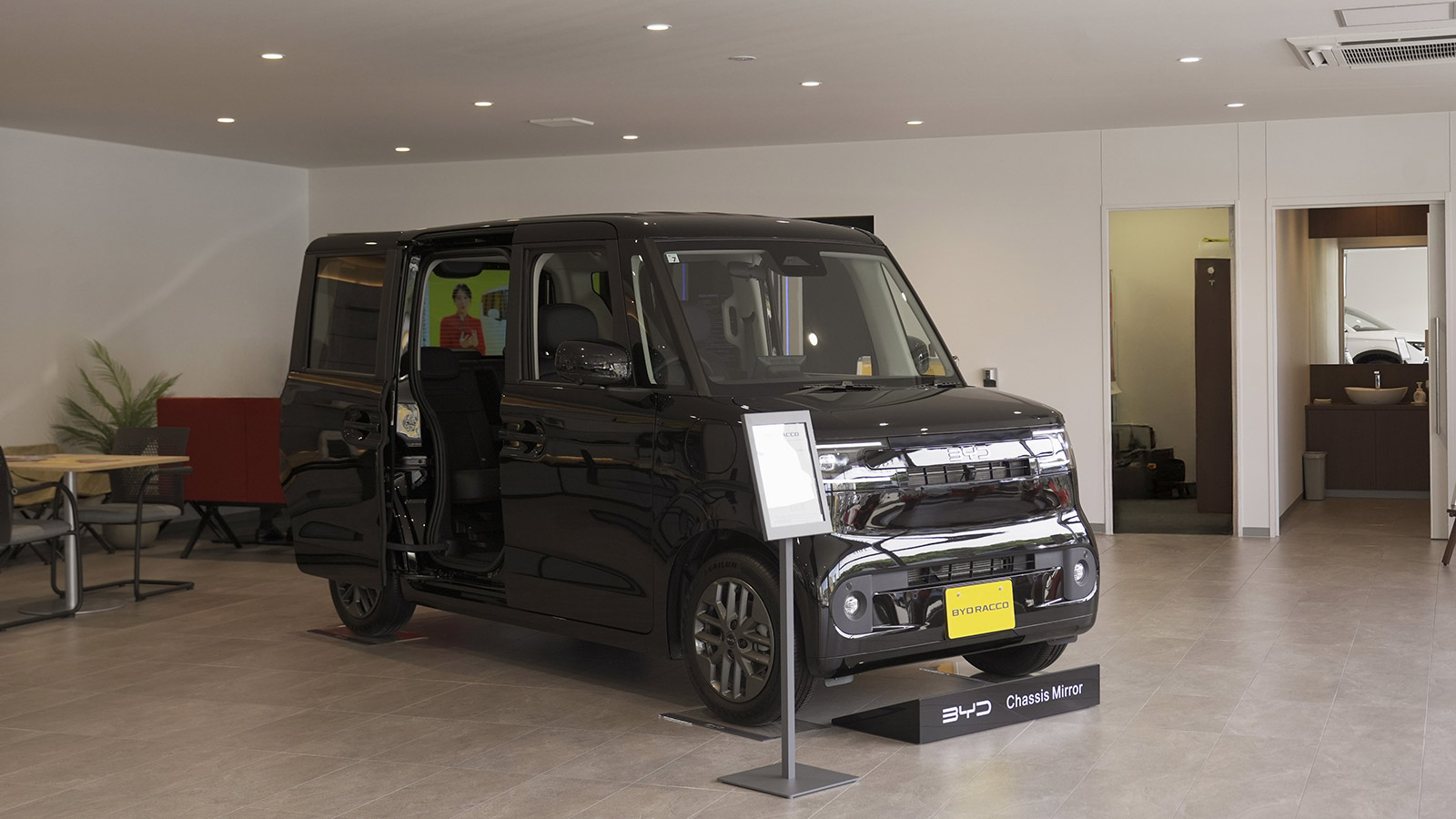
- BYD will repurpose the X-PACK technology introduced in Japan to develop small EVs, with plans to sell them in Europe and other global markets.
- First used in the Racco, X-PACK integrates the inverter and other electrical components into the battery pack, freeing up cabin and crash-energy absorption space.
BYD (HKEX: 1211) reportedly plans to take the technology used in its Japan-only Racco electric K-Car global to develop small electric vehicles (EVs) for markets including Europe.
The company recently decided to use its in-house-developed X-PACK battery pack, first installed in the Racco, to develop small EVs. It will begin detailed development work and expects the new models to reach the market within several years, Nikkei's Chinese-language website reported on Monday.
X-PACK integrates major electrical components, including the inverter that converts voltage, into the battery pack and installs the entire system beneath the vehicle floor.
In conventional designs, these components are typically housed in the engine compartment at the front of the vehicle, taking up limited cabin and crash-energy absorption space in small cars, the report noted.
By eliminating the need to install some components in the cabin or front section, X-PACK helps the Racco balance passenger space and crash safety within the strict dimensional limits for K-Cars.
Japanese rules limit K-Cars to 3.4 meters in length, 1.48 meters in width and 2 meters in height, making it more challenging to package batteries and electrical systems in electric models.
The plan would turn space-saving technology developed for Japan's distinctive market into a potential competitive advantage for BYD's global small-EV lineup.
Rising European demand for more affordable small EVs also provides a new application for the technology. The European Union decided in 2025 to introduce a new vehicle category modeled on Japan's K-Car standards, Nikkei noted.
Under the plan, small EVs produced in the EU and measuring no more than 4.2 meters in length could receive preferential treatment in subsidies and regulatory requirements.
BYD could produce X-PACK-equipped small EVs in Europe. Its Hungary plant, scheduled to begin production in 2026, could provide a potential manufacturing base.
Local production in Europe could not only help BYD qualify for policy support, but also reduce the impact of additional EU tariffs on EVs imported from China.
Small EVs based on the Racco technology could also be sold in Southeast Asia and South America, where demand is strong for affordable, compact vehicles, the report said.
The Racco went on sale in Japan on July 28. Developed specifically for the local market, it measures 3,395 millimeters in length, 1,475 millimeters in width and 1,800 millimeters in height.
Its entry-level version uses a 22.4 kWh battery and offers a WLTC range of 210 kilometers. Higher-end versions carry a 35.84 kWh battery and have a range of 320 kilometers.
BYD said the Racco is Japan's first electric K-Car with a range exceeding 300 kilometers and the country's first electric K-Car equipped with power sliding doors.
The model starts at 2.145 million yen ($13,430). After a government subsidy of 150,000 yen, the entry-level version costs less than 2 million yen.
As of August 9, the Racco had received 1,002 orders in its first 2 weeks on sale, with the higher-end 300 Premium accounting for 80%, BYD Japan said earlier this month.
BYD's effort to bring Racco technology to more markets comes as competition in China's auto market continues to intensify, making overseas expansion increasingly important to sustaining sales growth.
In the first half, BYD generated revenue of 344.82 billion yuan ($50.84 billion), with overseas markets contributing 181.27 billion yuan, or 52.57% of the total. It was the first time in BYD's history that overseas revenue accounted for more than half of its total.
($1 = 6.7828 yuan, $1 = 159.77 Japanese yen, )
Source: CnEVPost (View original)