

Image source: AutoHaina Media
The Denza Z9 GT station wagon will become BYD’s first car with God’s Eye City Navigation Driving Assistant (CNOA) in Europe. This system will allow the Z9 GT to travel from address to address autonomously under the driver’s supervision. It will arrive in 2027, following Xpeng’s NGP that we recently tested in Paris.
BYD officials revealed that the Denza Z9 GT will get the CNOA function at the Paris Auto Show 2026. This system is officially marketed as “God’s Eye.”
According to the brand’s officials, the Denza Z9 GT equipped with God’s Eye CNOA will be capable of fully autonomous urban navigation. We would like to highlight that this system has Level 2 autonomy and can’t be considered an autopilot. The driver still needs to constantly monitor the process, being ready to take over at any time.
“We are delighted to deliver on our promise by bringing the benefits of God’s Eye to the Z9GT, including assisted city navigation. This technology will help make city riding less stressful, from traffic jams to busy intersections and roundabouts,” said Stella Li, Executive Vice President of BYD.
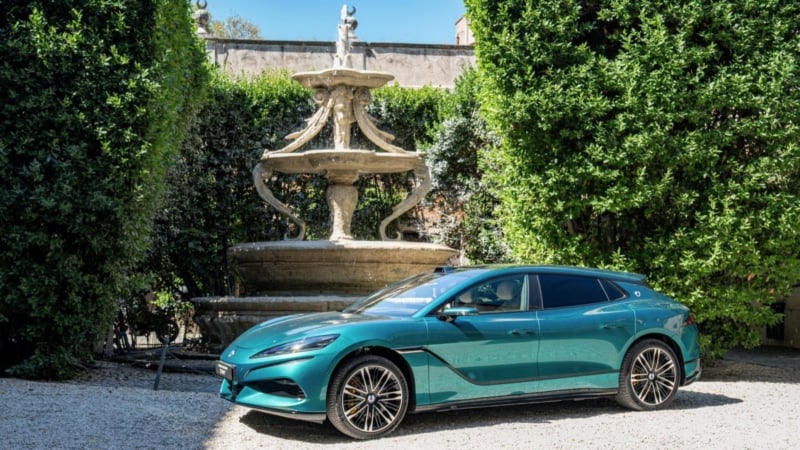
BYD is on time with its God’s Eye CNOA, as Xpeng will bring its Navigation Guided Pilot (NGP) to Europe in Q1 2027. Models with the Turing AI chip, such as the P7+ sedan, the X9 minivan, the L03 coupe crossover, and the recently launched G9L SUV, are expected to get this tech first. So, Xpeng will go after Tesla in intelligent driving. And BYD needs to join rapidly as well.
Previously, the Denza Z9 GT became the first BYD-made vehicle with flash charging to enter Europe. On October 12, the automaker announced that the BYD Atto 8 large SUV will also adopt this technology. We expect that the God’s Eye CNOA, first introduced to Europe by the Z9 GT, will be shortly applied to other BYD cars. As a result, we will probably see a generous pile of such vehicles coming to European roads.
In China, the Denza Z9 GT adopts the God’s Eye 5.0 ADAS system with China’s first 4nm SoC called Xuanji A3. A single chip has a peak computing power of around 700 TOPS. It gathers information from a LiDAR sensor, mm-wave radars, ultrasonic sensors, and cameras.
Source: CarNewsChina (View original)