

Image source: AutoHaina Media
China’s Ministry of Industry and Information Technology (MIIT), usually known for publishing official images of upcoming vehicles, has launched a public consultation on draft laws regarding new vehicle technologies.
The consultation covers vehicle safety, operation, and user interfacing, with an emphasis on “levitating zero-G” seats, infotainment screens, and user-defined headlight & taillight messaging. The MIIT has also reiterated its draft proposal on mechanical door handles, first published in late 2025 after a string of high-profile Xiaomi SU7 crashes.
Seats stay still
One section of the draft focuses on interior seating and proposes more stringent crash, anti-pinch, and reliability tests for “innovative” seating functions. It mentions “Zero-G”, rotating, and fold-flat seats as examples.
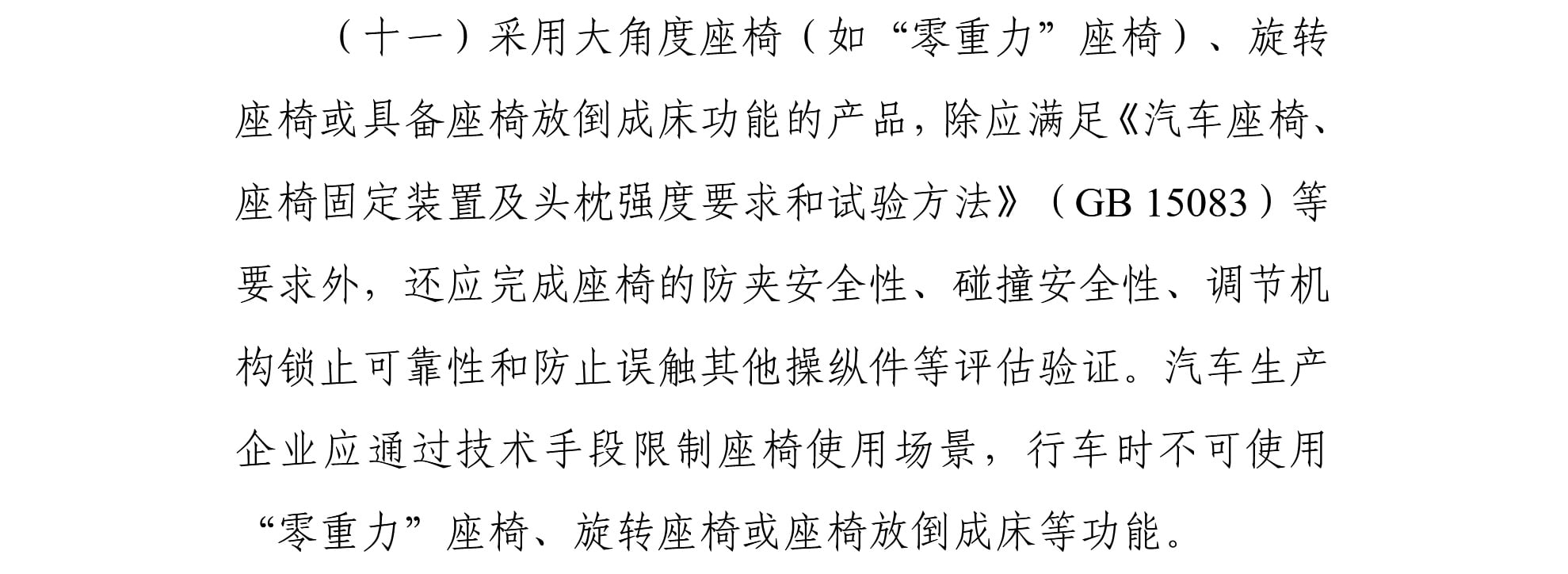
The MIIT has also recommended that automakers set limits on where and when moving-seat functions can be used to ensure safety. It also proposes banning these functions when the vehicle is in motion.
Too many screens?
Another part of the draft raises questions about in-vehicle display units, including centre-mounted infotainment screens, displays with a “large surface area”, and complex head-up displays (HUD).
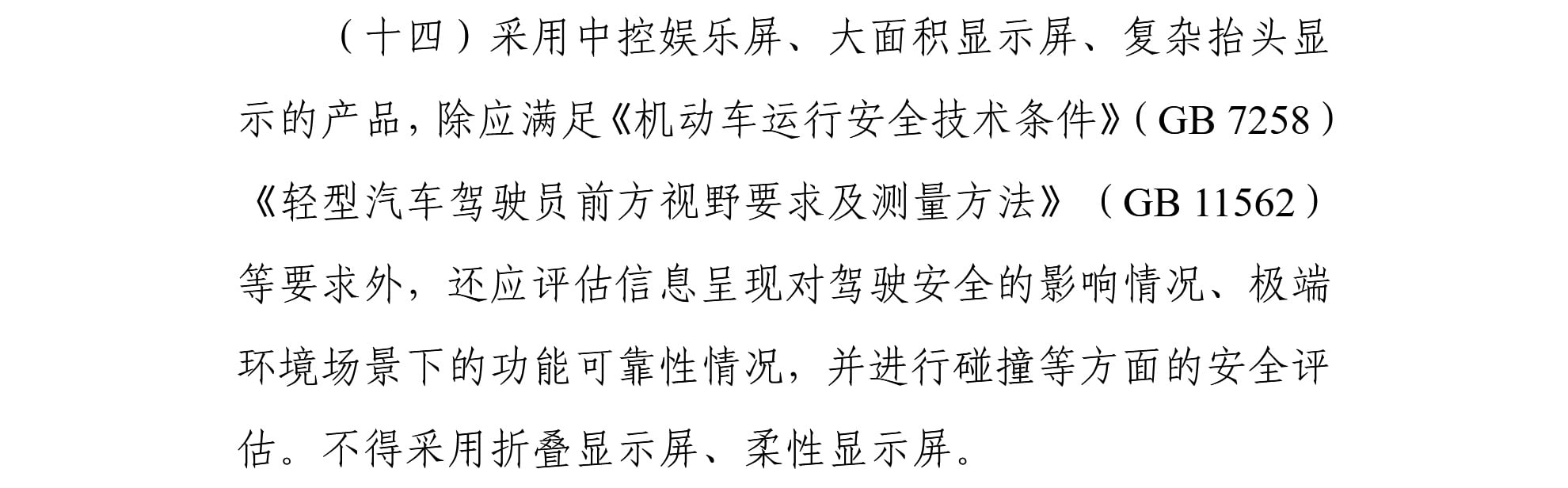
The ministry is asking automakers to evaluate these displays’ distracting effects on drivers, as well as their reliability and safety in collisions and extreme conditions. It also proposes banning folding and flexible screens, which may be bad news for tech-heavy brands like Xiaomi and Huawei’s HIMA.
Watch your (LED) words
The draft also proposes new vehicle lighting regulations, focusing on lighting assemblies, protruding lighting units, and user-defined headlight & taillight messaging. Some NEV models now offer matrix LED lighting, allowing users to project drawings and text from their cars.
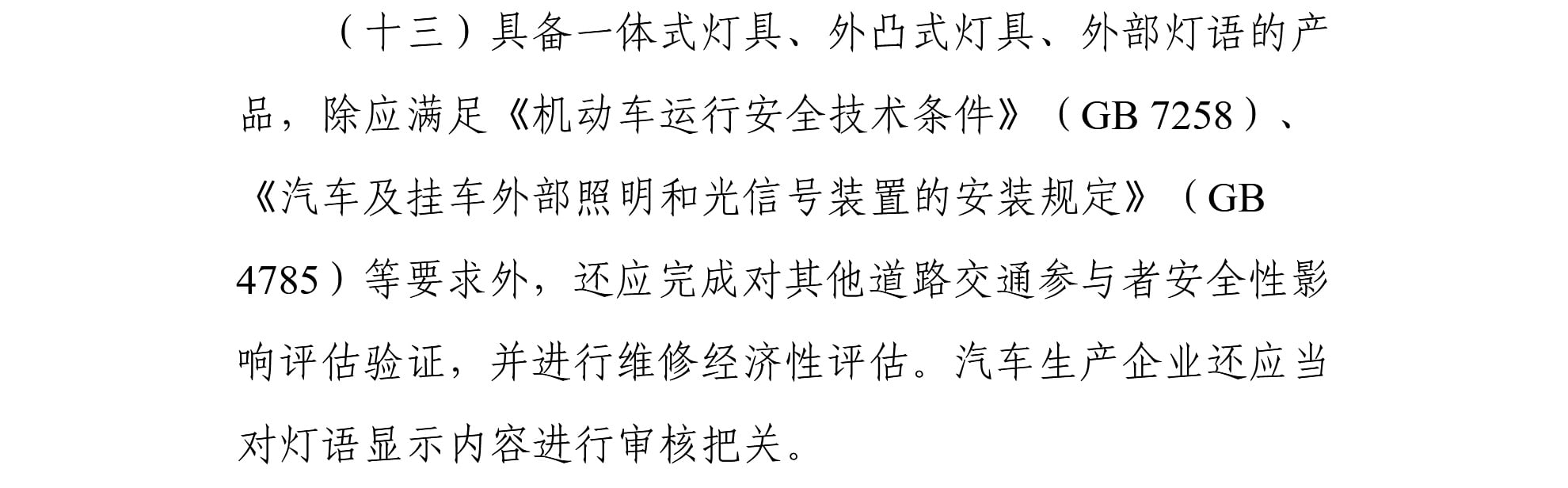
That last feature may have spooked some ministry higher-ups, raising fears that drivers could project “unapproved” content on Chinese roads. The MIIT now recommends that automakers moderate content on their lighting units and monitor what drivers write.
This proposed limitation is not unprecedented in the country. Many Android smartphones sold in China have implemented filtering and auditing checks in their operating systems, preventing users from choosing names with sensitive keywords for Wi-Fi hotspots and Bluetooth connections.
No more hidden door handles
The ministry has reiterated its proposed ban on fully-hidden door handles. It previously published diagrams of what it deems “ideal” door handles and specified several preferred designs for both exterior and interior handles.
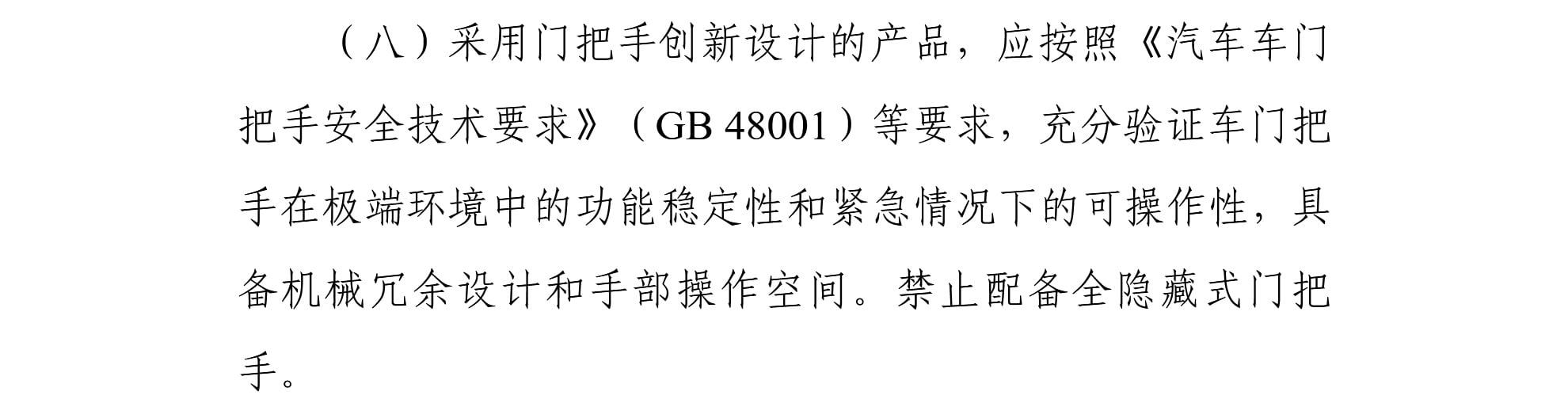
The latest draft also covers door handles with “innovative designs”, asking automakers to verify the reliability and safety of new handle designs under extreme conditions. It also requires new designs to integrate redundant mechanical linkages and ensure sufficient space for hand operation.
Source: MIIT of the People’s Republic of China
Source: CarNewsChina (View original)